And he definitely cares about the midterms.
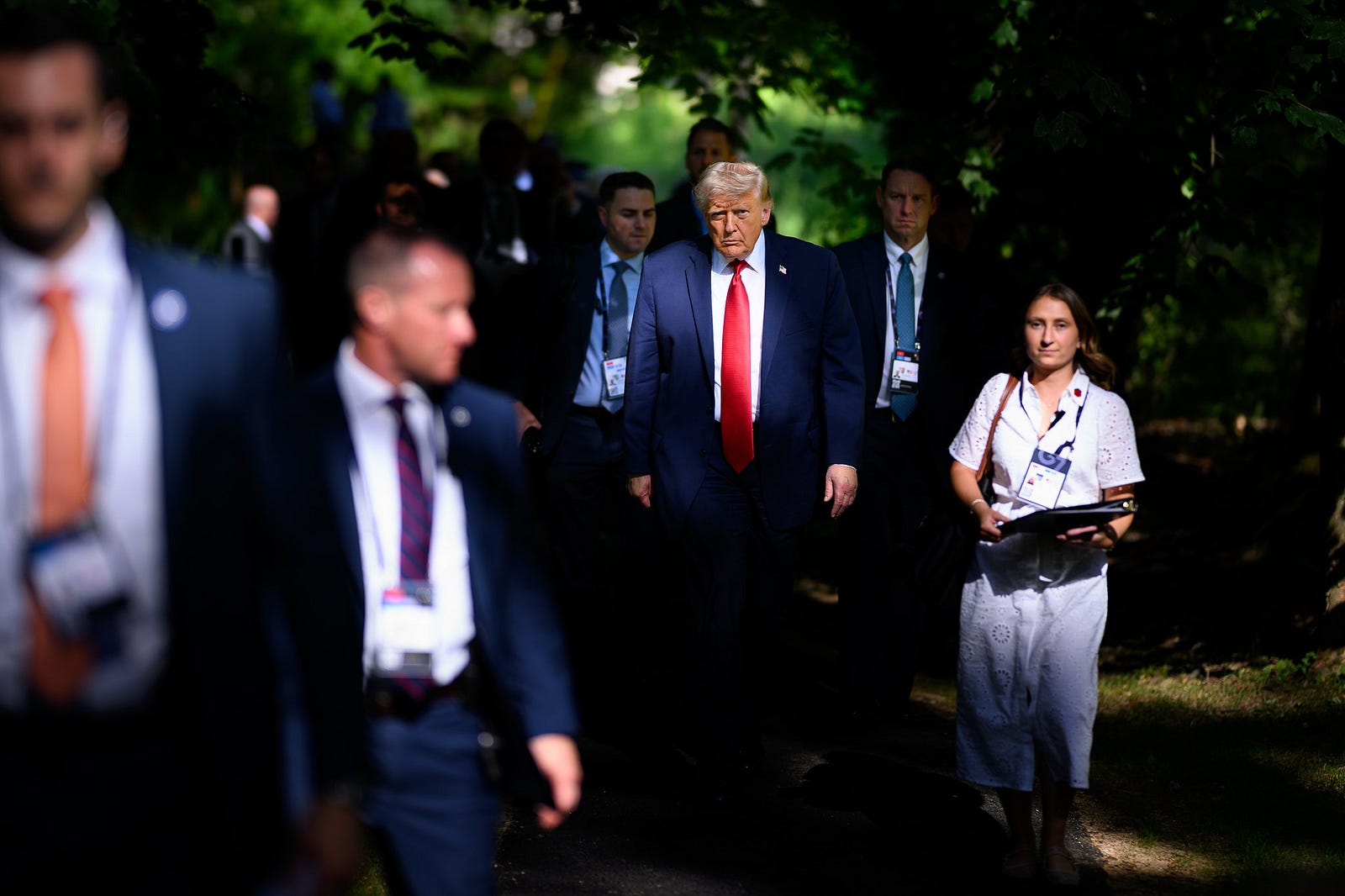
Donald Trump says he does not care about the midterms. Well, he would. Trump, as savvy a negotiator as they come, obviously wouldn’t be one to advertise his pressure points during the Art of the Deal.
And maybe he even means it in the narrow sense. Trump has never been a cautious, consultant-driven politician whose first instinct is to ask how every move will poll in suburban districts.
But the midterms care about him.
And this midterm is not a side story. It may decide whether Trump has a functioning Congress for the second half of his term or spends two years fighting subpoenas, investigations, shutdown threats, and Democratic obstruction no end. Whatever Trump says publicly, the stakes are obvious.
That is where Iran becomes politically dangerous.
The conflict itself was not created by Trump. Iran’s nuclear ambitions did not begin in 2025 or 2026. Neither did its terror-proxy network, its funding of Hezbollah and Hamas, its threats to Israel, or its long record of using chaos as a bargaining chip. The Obama-era nuclear deal may have temporarily limited parts of Iran’s nuclear program, but it left enormous problems outside the frame: missiles, proxy warfare, terror funding, sunset clauses, and the regime’s broader regional project.
Trump inherited a problem that had been managed and delayed for years. The fact that Iran is still a crisis does not prove Trump caused the crisis.
Politics is rarely that fair.
Voters do not usually trace a policy problem back through four administrations. They do not sit at the kitchen table diagramming the JCPOA, the IRGC, frozen assets, sanctions enforcement, and the Strait of Hormuz. They ask a simpler question: who is in charge while life is getting more expensive?
That is why Iran could hurt Republicans even if Trump’s broader case is right.
Foreign policy usually lives below groceries, gas, rent, and jobs. But when a foreign-policy crisis raises gas prices, it becomes domestic politics overnight. A voter does not have to sympathize with Tehran to be angry about paying nearly four dollars a gallon. A voter does not have to believe Democrats have a better Iran policy to punish the party in power for instability.
Democrats have an easy argument available to them. Trump promised strength and stability. The country got war, higher gas prices, and an uncertain agreement whose hardest questions remain unresolved. That argument leaves out plenty. It ignores Iran’s aggression, the weakness of past diplomacy, and the possibility that force was necessary to bring Tehran back to the table. But campaigns are not graduate seminars. Simple arguments often travel farther than complete ones.
The danger for Trump is not that Americans will decide Iran is the good guy. They will not. Iran remains a hostile regime, and most voters understand that. The danger is that Iran becomes part of a larger mood: the world feels unstable, prices feel high, and Washington feels consumed by problems that never quite get solved.
The agreement could still rescue Republicans from the worst version of this story. If it holds, gas prices continue to fall, shipping stabilizes, and Iran appears visibly weaker, Trump can argue that his approach worked. He stood with Israel, a long-term and trusted American ally. He confronted Iran. He forced Tehran to the table. He avoided a wider regional war. He can call that peace through strength, and many voters may accept it.
But the agreement has to produce visible results before fall.
If Iran receives sanctions relief or access to funds while retaining too much nuclear capacity, the right will call it weakness and the left will call it failure. If Hezbollah or another Iranian proxy reignites the fighting, the ceasefire will look temporary. If gas prices remain high into October, voters will not care how much blame belongs to Obama, Biden, Tehran, or Europe. They will blame the president’s party.
My guess is that Iran is a moderate but real midterm risk for Republicans. Not fatal by itself. Not necessarily decisive. But dangerous enough to matter in close House races and Senate contests where a few points can decide control.
The best outcome for Republicans is not that Iran becomes a triumphant campaign centerpiece. It is that Iran fades. The war ends, the deal holds, gas falls, and voters stop thinking about the Middle East every time they fill up their cars.
The worst outcome is an unresolved crisis: no clear victory, no full peace, no cheap gas, and no final answer on Iran’s nuclear program. That kind of story is politically poisonous because everyone can attach his own frustration to it.
Trump may not have created the Iran problem. But he is president now. If the agreement holds and prices fall by autumn, he may escape most of the political damage. If the crisis drags on, even unfairly, Iran could become one more reason voters decide the party in power has made their lives harder.
(Contributing writer, Brooke Bell)